Gabriele D’Annunzio - Italy’s Poet, Patriot, and Provocateur
Explore the life, literary legacy, and cultural impact of Gabriele D’Annunzio, Italy’s iconic poet, novelist, and political provocateur.
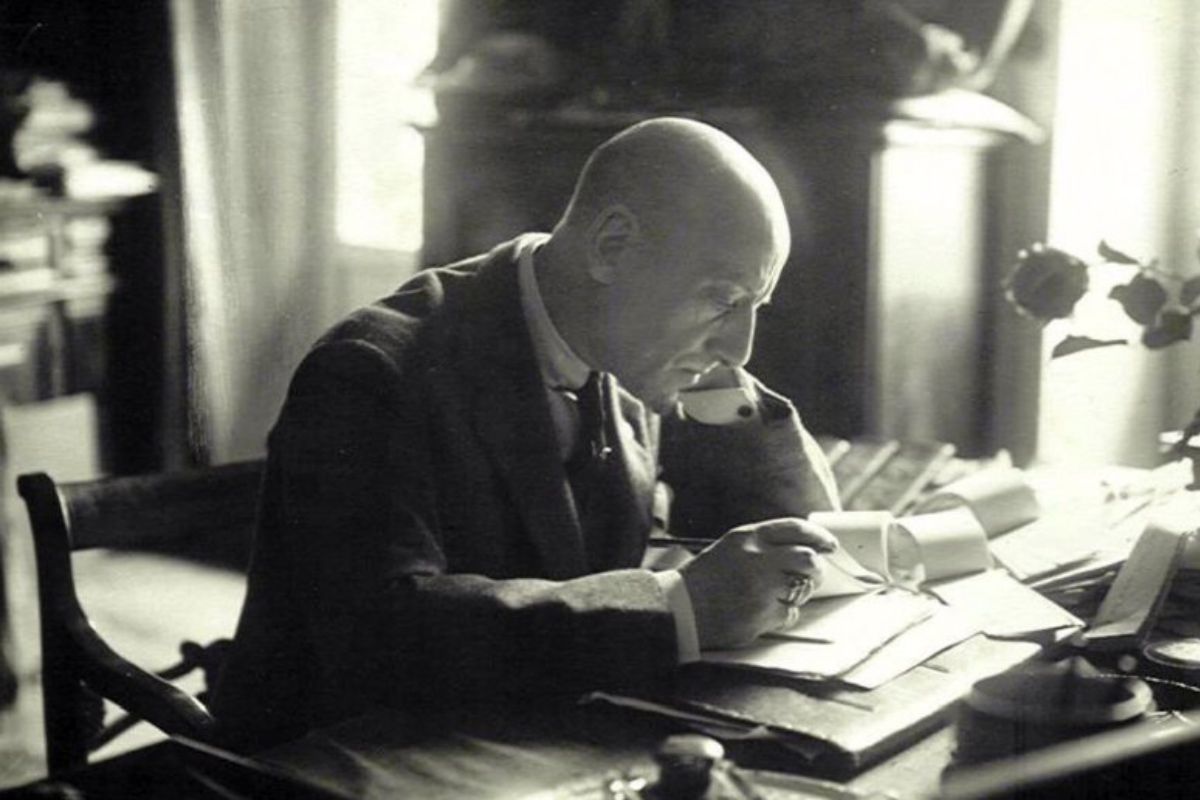
General Gabriele D'Annunzio, Prince of Montenevoso, was an Italian poet, playwright, orator, journalist, aristocrat, and officer in the Royal Italian Army during World War I. Known for his influential role in Italian literature from 1889 to 1910 and his political impact from 1914 to 1924, he is often celebrated by the epithets il Vate ("the Poet") and il Profeta ("the Prophet"). His works were closely tied to the Decadent movement, drawing from French symbolism and British aestheticism, and often explored themes both sensual and mystical. The philosophies of Friedrich Nietzsche also deeply shaped his writing and political endeavors.
Gabriele D’Annunzio: Italy’s Poet, Patriot, and Provocateur
Gabriele D’Annunzio is a name that resonates deeply within Italian literature, politics, and culture. Known for his vibrant writing, controversial views, and nationalistic fervor, D’Annunzio shaped Italy’s literary landscape and influenced generations with his bold personality. From his celebrated novels to his audacious exploits in politics, D’Annunzio left a mark that endures in Italy and beyond. Let’s dive into the world of this legendary Italian figure, exploring his remarkable life, significant works, and lasting impact on Italian and global culture.
Early Life and Literary Beginnings
Born in 1863 in Pescara, Italy, Gabriele D’Annunzio showed an early penchant for the arts and literature. Raised in a middle-class family, he was a precocious child known for his wit and charm. By his teenage years, D’Annunzio had already begun publishing poetry, with his first collection, Primo Vere, appearing at the age of sixteen. This marked the beginning of his journey into the literary world, where he would soon be recognized as one of Italy’s most talented and controversial voices.
Rise to Fame as a Novelist and Poet
D’Annunzio's rise to prominence came in the late 19th century with works like The Triumph of Death and The Flame of Life, novels that captured the decadence and existential crises of the time. His writing was marked by rich symbolism, lyrical beauty, and a deep exploration of human desires. Notably, his novel Il Piacere (The Child of Pleasure) brought him widespread fame, highlighting his sophisticated style and complex characterizations.
- Noteworthy Works:
- Il Piacere (The Child of Pleasure) - A tale of love and decadence in Italy’s aristocratic circles.
- La Città Morta (The Dead City) - A drama exploring themes of passion and tragedy.
- La Nave (The Ship) - A play underscoring his fascination with Italian nationalism.
Influence on Italian Nationalism and Politics
D’Annunzio was more than a writer; he was an ardent nationalist with a strong political vision for Italy. His fervent patriotism drew him to political activism, especially during World War I, where he actively supported Italy’s involvement. Not one to stay on the sidelines, he even enlisted as a soldier and became a war hero, famously piloting a daring raid over Vienna, where he dropped Italian propaganda pamphlets from the skies.
The Fiume Episode: A Bold Political Statement
In 1919, D’Annunzio staged one of his most infamous acts: the occupation of Fiume (modern-day Rijeka, Croatia). Leading a group of passionate followers, he declared the city an independent Italian state under his rule. This act, which lasted over a year, was a blend of performance art and political theater, showcasing his flair for dramatic nationalism. The episode foreshadowed the rise of Fascism in Italy and demonstrated D’Annunzio's influence on the country’s political evolution.
D’Annunzio’s Artistic Influence and Legacy
D’Annunzio’s work left an indelible mark on Italian literature and arts. He was known for his intense, almost obsessive attention to beauty and aesthetics. His works celebrated Italian culture, history, and landscapes, often blending romanticism with realism and reflecting his complex relationship with Italian identity.
Cultural and Literary Legacy
- Impact on Italian Literature: D’Annunzio’s rich, expressive language influenced countless Italian writers and continues to be studied for its poetic style and thematic depth.
- Influence on Fascism and Politics: Although he was not directly aligned with Mussolini, D’Annunzio’s ideals on nationalism and his theatrical political actions are seen as influential in the rise of Fascist ideology in Italy.
- Villa Cargnacco (Vittoriale degli Italiani): D’Annunzio’s residence, now a museum, is a testament to his life, filled with memorabilia, artifacts, and architectural flourishes that capture his eccentric personality.
Controversies and Criticism
D’Annunzio’s life was as controversial as his writing. His flamboyant lifestyle, romantic entanglements, and outspoken nature garnered both admiration and criticism. Some viewed him as a brilliant artist, while others saw him as a self-indulgent provocateur. His nationalist rhetoric, which celebrated war and heroism, has sparked debates among historians, especially given its influence on Fascist propaganda.
FAQs about Gabriele D’Annunzio
Q: What is Gabriele D’Annunzio best known for?
A: D’Annunzio is best known for his contributions to Italian literature and his bold role in nationalist politics, including his occupation of Fiume.
Q: How did D’Annunzio influence Italian literature?
A: Through his lyrical style, exploration of human psychology, and vivid symbolism, D’Annunzio set a high standard for Italian literary aesthetics.
Q: Was Gabriele D’Annunzio a supporter of Fascism?
A: While D’Annunzio shared some nationalistic ideals with the Fascist movement, he did not fully align himself with Mussolini’s regime. However, his actions and views on nationalism influenced the era's political climate.
Q: What is the Vittoriale degli Italiani?
A: The Vittoriale degli Italiani is D’Annunzio’s villa-turned-museum on Lake Garda, which houses artifacts from his life and honors his legacy.
Final Thoughts
Gabriele D’Annunzio’s life was a blend of artistic genius, political ambition, and personal drama. His contributions to Italian literature and culture remain influential, while his actions in politics offer a unique perspective on early 20th-century Italian nationalism. Through his legacy, D’Annunzio continues to captivate readers and historians alike, inviting us to explore the boundaries between art, patriotism, and power.
Books about Italy
Biographies, histories and the Italian classics, in print.
Browse the shop →